The US tightens its grip on Venezuela
Dec 18, 2025
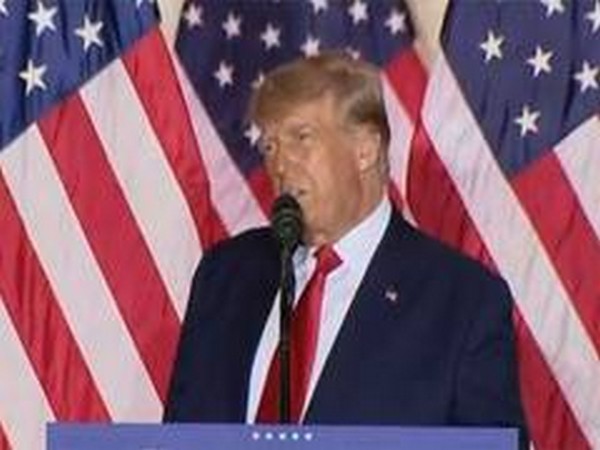
New York [US], December 18: In a post on the social media platform Truth Social yesterday morning, President Trump ordered a "complete and thorough" blockade of sanctioned oil tankers entering and leaving Venezuela . According to the leader, surrounding Venezuela now is "the largest fleet ever assembled in South American history, and its size will continue to expand." Last week, the U.S. seized a large oil tanker named Skipper off the coast of Venezuela.
In a statement yesterday, the Venezuelan government declared its opposition to Trump's "reckless and serious threat." On December 16, the country sent an official note to the UN Security Council, accusing the US of "piracy" after seizing a shipment of Venezuelan oil in international waters, according to AFP. The government of President Nicolas Maduro accused the US military of forcibly seizing a private vessel at sea, kidnapping the crew, and illegally confiscating the oil, which is a legitimate and commercially viable product. Venezuela called on the Security Council to condemn the US action and demanded that Washington release the ship and its crew.
America's intentions
Prior to issuing the order, the Trump administration had deployed a large military force to the Caribbean with the stated purpose of combating drug trafficking. Since the beginning of September, the U.S. has conducted 25 raids on ships allegedly carrying drugs in the Caribbean and eastern Pacific , resulting in at least 95 deaths.
According to AP, the force in the area includes 11 naval vessels, including an aircraft carrier and several amphibious assault ships, carrying numerous fighter jets and helicopters. In recent weeks, the force has been further reinforced with the arrival of P-8 Poseidon anti-submarine patrol aircraft, KC-135 and KC-46 aerial refueling aircraft, HC-130J battlefield search and rescue aircraft, and HH-60W rescue helicopters.
The White House insists that the forces in the region are solely for anti-drug purposes and asserts that President Trump is not interested in a protracted war. Conversely, Venezuelan officials argue that the US deployment to the region is aimed at stealing Venezuela's oil and gas resources, and that the anti-drug campaign is merely a pretext to pressure the Maduro government.
In an interview published in Vanity Fair on December 16, White House Chief of Staff Susie Wiles offered controversial information about the intentions behind the recent attacks on ships. "He (President Trump ) wants to keep blowing up ships until Maduro surrenders. And people much smarter than me on this are saying he will surrender," Wiles was quoted as saying.
Congress takes action.
Venezuela possesses the world's largest oil reserves, producing approximately 1 million barrels per day, of which about 85% is exported, according to some experts. A prolonged blockade of oil shipments could deplete a significant source of revenue for the Caracas government. According to The Wall Street Journal , crude oil revenue accounts for more than 90% of Venezuela's total export earnings.
Data from oil tanker tracking websites shows that seven oil tankers have been stranded in Venezuela's Jose and Amuay ports for nearly a week following recent seizures. In addition, at least six supertankers scheduled to arrive in Venezuela to unload crude oil in the next two weeks have turned back. Crude oil prices surged on December 17th as investors anticipated a decline in Venezuelan exports, although they remain on the wait-and-sees of the Trump administration's next move.
U.S. presidents have the authority to deploy forces overseas, but Trump's decision to impose a military blockade could spark new legal debate regarding presidential authority. Some legal experts argue that a military blockade could be considered a permissible tool of war, but subject to strict conditions.
Meanwhile, Congressman Joaquin Castro (Democrat) said Trump's order "is definitely an act of war." Like many other lawmakers before him, Castro accused the White House of pushing the US closer to a war that "Congress has never approved and the American people do not want." Castro said the House would vote on a resolution demanding the president end hostilities with Venezuela on December 18.
Source: Thanh Nien